01/13/2012. From a lecture by Professor John Ousterhout at Stanford, class CS140
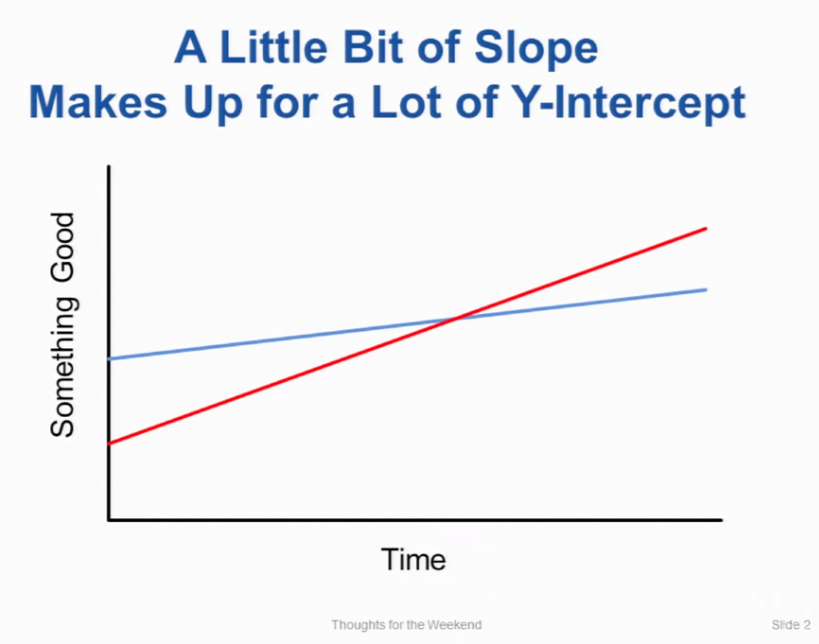
Here's today's thought for the weekend. A little bit of slope makes up for a lot of Y-intercept.
[Laughter]
| XcmVersionedXcm.V4([ | |
| XcmV4Instruction.WithdrawAsset([{ | |
| id: dot_loc, | |
| fun: XcmV3MultiassetFungibility.Fungible(withdrawAmount) | |
| }]), | |
| XcmV4Instruction.BuyExecution({ | |
| fees: { | |
| id: dot_loc, | |
| fun: XcmV3MultiassetFungibility.Fungible(final_fees) | |
| }, |
| pnpm contracts:deploy | |
| > my-polkadot-dapp@0.0.0 contracts:deploy /home/muddl/smart-contracts/my-polkadot-dapp | |
| > pnpm --filter=contracts deploy-contracts | |
| > contracts@0.0.0 deploy-contracts /home/muddl/smart-contracts/my-polkadot-dapp/contracts | |
| > npx tsc && node dist/deploy.js | |
| Deploying contract Context... |

| const message = XcmVersionedXcm.V4([ | |
| // 1. Withdraw DOT from Asset Hub | |
| XcmV4Instruction.WithdrawAsset([dotAsset]), | |
| // 2. Deposit to HydraDX with instructions | |
| XcmV4Instruction.DepositReserveAsset({ | |
| assets: dotAssetFilter, | |
| dest: hydradxDest, | |
| xcm: [ | |
| // 2a. Pay for execution on HydraDX |
| [2024-10-24 04:58:12] | |
| Theme: decentralization | |
| Content: In the vast tapestry of the blockchain cosmos, Polkadot stands as the celestial bridge, where myriad chains dance in harmony. Decentralization whispers freedom, each node a flickering star, united yet sovereign, forging a constellation of collective strength. | |
| ================================================== | |
| [2024-10-24 04:58:18] | |
| Theme: consensus | |
| Content: Beneath the canopy of interconnected stars, consensus flows like celestial rivers, guiding each shard to harmony. In Polkadot's embrace, every validator becomes a guardian of the unified dawn, where trust and truth weave the fabric of decentralized eternity. 🌌🔮 #BlockchainWisdom |
| To find out where disk space is being used: | |
| 1. Get to the root of your machine by running cd / | |
| 2. Run sudo du -h --max-depth=1 | |
| 3. Note which directories are using a lot of disk space. | |
| 4. cd into one of the big directories. | |
| 5. Run ls -l to see which files are using a lot of space. Delete any you don’t need. | |
| 6. Repeat steps 2 to 5. | |
| ### Hitanshu Gandhi Adivce | |
| - I am not a product guy by trade and it is just critical thinking (after years of beating recieved in the consulting profession) I bring to the table. | |
| - No rocket science - read a lot, ask stupid questions, find learning communities and debate vigorously. Be humble to recognize when you're on the wrong track | |
| - What's the worst that could happen? You'd be wrong - but you'd be so much richer for it. Of course, find places with folks much smarter or experienced than you. | |
| - You learn from getting schooled badly not from coming to the right answer. Not much growth there personally. | |
| - Lastly, ask around - esp in product - always assume you are not your own customer. Always ask how would my grand mom or Ramu kaka (stereotypical tech illterate non MBA aam aadmi) reach? |
Q. You should definitely learn something like Erlang/Elixir which completely changes the way you think about building software. Answer:
Yes. They are functional languages. They force you to think in terms of data manipulation through functions instead of objects. Elixir and Erlang have this ideology of "Let it fail". Distributed systems are hard, and there is no way you can code around all errors and exceptions. So you let a process fail if it catches an unhandled exception, and restart it using something called as a process monitor. They teach you how immutability is good. All these ideas you can start using in your day to day languages.
This is a paragraph, which is text surrounded by whitespace. Paragraphs can be on one
Picking the right architecture = Picking the right battles + Managing trade-offs